
Philadelphia Swimming Pool Accident Attorney
Swimming pools are supposed to be places to cool off and relax, but the areas surrounding them can become dangerous when property owners fail to maintain safe walking surfaces. Slick pool decks, broken pavement, loose tiles, damaged stairs, and other hazards can cause serious slip and fall accidents.
Philly Slip and Fall Guys focuses on premises liability and slip, trip, and fall claims. A Philadelphia swimming pool accident attorney from our firm can investigate the condition that caused your fall, determine who was responsible for maintaining the property, and help you understand your options for pursuing compensation.
With more than 23 years of premises liability experience, our team understands that proving a pool accident case requires more than showing that an injury occurred. We look for evidence showing what made the property unsafe and what the responsible party did, or failed to do, about it.
If you were injured after slipping or tripping around a swimming pool, call Philly Slip and Fall Guys at 215-268-6898 for a free consultation.
Dangerous Conditions Around Swimming Pools
Water around a swimming pool is expected. That does not mean pool owners can ignore unsafe walking conditions or allow preventable hazards to remain throughout the pool area.
Swimming pool accidents involving slips and falls can occur at private pools, apartment complexes, hotels, recreation centers, swim clubs, and other properties throughout Philadelphia. Common hazards may include:
- Excessively slippery pool decks
- Standing or improperly drained water
- Broken or loose tiles
- Cracked concrete
- Uneven pavement or coping
- Damaged stairs
- Missing or loose handrails
- Poor lighting
- Debris in walking areas
- Loose or damaged drain covers
- Unsafe transitions between surfaces
- Unmarked changes in elevation
- Damaged gates or barriers
- Hazards around diving boards and pool entrances
Not every fall near a swimming pool means the property owner was negligent. The circumstances surrounding the hazard matter, including how it developed, how long it existed, whether the owner knew about it, and whether reasonable inspections or maintenance should have uncovered the problem.
Pool Owners Have Responsibilities for Their Property
Pennsylvania premises liability law generally looks at the relationship between the injured person and the property owner, the condition that caused the accident, and what the owner knew or reasonably should have known about it.
Someone invited onto property for the owner’s benefit, such as a hotel guest or paying visitor to a recreational swimming establishment, may be owed different duties than someone entering private property without permission. The facts matter when determining what duty existed.
For many swimming pool accident cases involving a fall, the investigation centers on whether the pool owner or another party responsible for the property failed to reasonably inspect, maintain, repair, or warn visitors about a dangerous condition.
A freshly spilled drink that existed for only seconds presents a different liability question than broken pool decking that had been deteriorating for months. Maintenance records, prior complaints, photographs, surveillance footage, and witness statements can help establish that difference.
Pool Decks Can Create Serious Slip and Fall Hazards
A pool deck will inevitably get wet, so the presence of water by itself does not automatically prove negligence. The important question is whether something made the walking surface unreasonably dangerous under the circumstances.
Poor drainage can allow large amounts of water to collect rather than drain away from walking areas. Damaged surfaces can create low spots where water pools. Algae or other buildup may make steps and surfaces unusually slick. Worn or inappropriate flooring materials can also affect traction.
Property owners should also consider how people reasonably use the pool area. Visitors may be walking between the pool, seating areas, restrooms, changing areas, and exits while surfaces are wet.
When someone suffers a fall accident, documenting the condition of the pool deck before it is cleaned, dried, repaired, or altered can become an important part of proving negligence.
Broken Surfaces Can Cause Trips Around Pools
Not every swimming pool injury involving the property starts with a slip. Trip and fall accidents can occur because the surface surrounding a pool has deteriorated or has not been properly maintained.
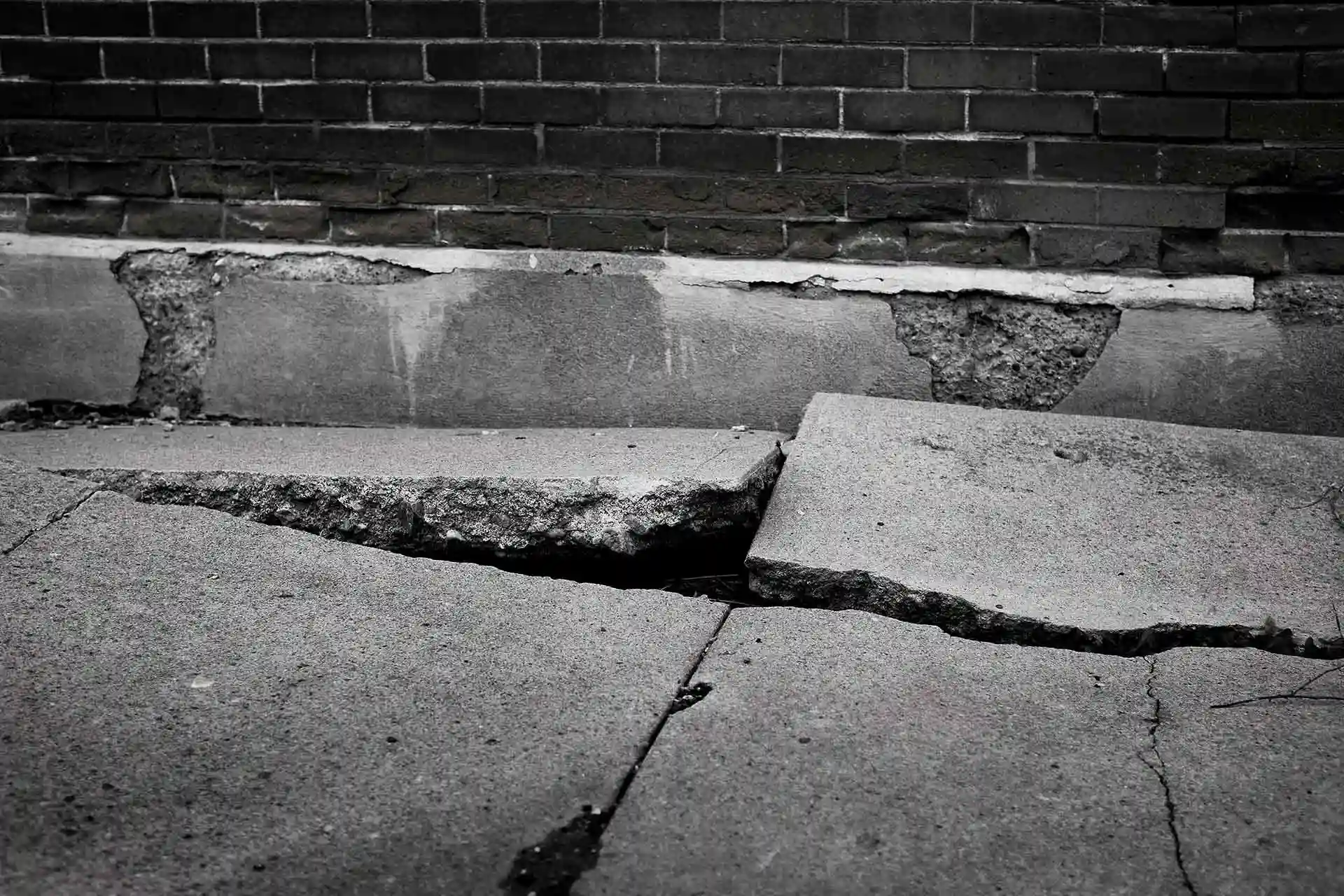
Cracked concrete, lifted sections of pavement, loose coping, broken tiles, exposed edges, damaged drain covers, and sudden changes in elevation can catch someone’s foot and cause a hard fall.
Outdoor pools can require particular maintenance after months of exposure to changing weather. Damage that develops over time may provide evidence that a property owner had an opportunity to discover and repair the condition before someone was hurt.
Photographs showing the size, depth, location, and surrounding area of a defect can be particularly useful when evaluating a fall claim.
Stairs, Handrails, and Pool Access Areas Require Maintenance
Stairs and access points deserve particular attention because a fall in these areas can send someone onto concrete, into surrounding structures, or down multiple steps.
Damaged stair surfaces, loose handrails, inadequate lighting, and slippery walking areas can all contribute to falls.
Ladders and other structures used to enter or exit the pool can also create premises liability concerns when the problem stems from improper maintenance of the property rather than a defective product. A loose attachment point, deteriorated walking surface, or unrepaired structural condition may require investigation to determine who was responsible.
Our focus is on whether the property and its walking or access areas were reasonably maintained, not unrelated product liability claims involving the manufacture of pool equipment.
Gates and Barriers Can Be Part of Pool Premises Safety
Pool safety also involves controlling access to the area. Philadelphia requirements for certain residential pools and spas include barriers designed to restrict access, including specifications for barrier height and gates.
A damaged fence, broken gate, or self-latching mechanism that no longer functions can indicate that an important part of the property has not been maintained.
The applicable requirements can vary depending on the type of pool and property. Private pools, hotel pools, apartment pools, and public swimming facilities may be subject to different standards.
Evidence that a property failed to comply with an applicable safety requirement may become relevant to a premises liability investigation, although a code violation does not automatically establish every element of a negligence claim.
Responsibility May Extend Beyond the Property Owner
The person or business named on the property deed is not necessarily the only party worth investigating after a Philadelphia swimming pool accident.
Depending on the property, responsibility for maintaining the pool area could involve:
- A property owner
- Apartment or condominium management
- A hotel operator
- A property management company
- A maintenance company
- A cleaning contractor
- A recreation facility operator
- Another business responsible for the specific area
Contracts and maintenance agreements may help establish who was responsible for inspecting, cleaning, repairing, or otherwise maintaining the location where the fall occurred.
Identifying the correct parties matters because a strong premises liability claim should be based on who actually had responsibility for the dangerous condition.
Evidence Can Show Why a Pool Accident Happened
Swimming pool accident cases can become difficult when the condition that caused the fall disappears.
Standing water can drain. A wet surface can dry. Debris can be removed. Broken tiles can be replaced. Employees can place warning signs after an incident. Surveillance footage may eventually be overwritten.
Useful evidence may include:
- Photographs and videos of the accident scene
- Surveillance footage
- Witness statements
- An incident report
- Inspection records
- Cleaning and maintenance logs
- Repair records
- Prior complaints
- Photographs of injuries
- Medical records
- Medical bills
- Employment records documenting lost wages
Evidence should help answer several questions: What caused the fall? Who controlled the area? How long had the condition existed? Was anyone aware of it? Were inspections being performed? Was anything done to correct or warn visitors about the danger?
Those details can be far more important than simply establishing that an accident happened near a swimming pool.
Steps to Take After a Swimming Pool Slip or Trip and Fall
Get medical care when you are injured. Some pool injuries, including fractures, sprains, ligament damage, and head injuries from striking a hard surface, may require treatment beyond what is immediately apparent after the accident.
If possible, photograph the exact condition that caused you to fall before leaving the pool area. Take wider photographs too, including surrounding walking surfaces, lighting, drainage, stairs, handrails, or warning signs.
Report the accident to the property owner, manager, or employee responsible for the facility and ask whether an incident report will be prepared. Provide accurate information about what happened without speculating about fault.
Collect the names and contact information of witnesses. Someone who saw the hazard before your accident may be able to provide important information about how long it existed.
Finally, preserve your shoes, clothing, photographs, medical documents, receipts, and communications relating to the accident.
Compensation After a Pool Slip and Fall
When a property owner’s negligence causes an injury, the injured person may be able to recover compensation for losses resulting from the accident.
Depending on the circumstances, damages may include medical expenses, rehabilitation expenses, lost wages, reduced earning ability, and future treatment associated with the injuries.
Non-economic damages may also be available for effects such as physical pain and limitations on everyday activities when supported by the evidence.
The value of a swimming pool accident case depends on the actual injuries and losses rather than an advertised “average settlement.” Liability, available evidence, insurance coverage, comparative negligence, and the long-term effect of the injury can all influence the outcome.
Pennsylvania Gives Injured People a Limited Time to File
Pennsylvania generally requires lawsuits seeking damages for personal injuries caused by negligence to be filed within two years. Certain circumstances can affect how a filing deadline is calculated, so an injured person should not assume that every case follows exactly the same timeline.
Waiting can also create problems long before the legal deadline arrives.
Pool conditions can change especially quickly. Water disappears, surfaces are cleaned, repairs are made, and seasonal pools may even close before an investigation begins. Witnesses can become difficult to locate, and surveillance footage may no longer exist.
Starting the investigation promptly gives a legal team more opportunity to preserve evidence showing what the property looked like when the fall occurred.
Philly Slip and Fall Guys Focuses on Premises Liability
There are many ways someone can be injured at a swimming pool. Philly Slip and Fall Guys does not need to pretend to handle every one of them.
Our focus is premises liability.
We represent people injured in slip, trip, and fall accidents caused by unsafe property conditions. When a case involves a swimming pool, we investigate the deck, stairs, walking surfaces, drainage, lighting, handrails, access areas, and other property conditions that may have contributed to the fall.
That focused approach allows our legal team to concentrate on the evidence needed to prove negligence rather than treating every pool-related incident as the same type of case.
We can investigate the accident scene, identify potentially responsible parties, seek maintenance and inspection records, collect witness statements, review medical documentation, and communicate with insurance companies on the client’s behalf.
No Attorney Fees Unless We Recover Compensation
Philly Slip and Fall Guys handles qualifying premises liability cases on a contingency fee basis. There are no upfront attorney fees, and the firm receives its legal fee from the recovery if compensation is obtained.
We also offer a free consultation so you can explain what happened and learn whether the circumstances may support a fall claim.
During that conversation, details such as the location of the accident, condition of the walking surface, available photographs, witnesses, incident reports, and medical treatment can help our legal team understand what should be investigated next.
Frequently Asked Questions
What should I do after slipping near a swimming pool?
Seek medical attention when you are injured, report the accident to the property owner or facility manager, and photograph the condition that caused you to fall if you can safely do so. Try to capture both close-up and wider views of the pool area, and collect contact information from witnesses. Keep your medical records, bills, photographs, clothing, shoes, and any incident documentation because these materials may help establish what happened and the losses associated with your injury.
Who can be responsible for a swimming pool slip and fall?
Liability depends on who owned, controlled, or was responsible for maintaining the area where the accident happened. Pool owners, hotels, apartment complexes, property managers, recreation facilities, maintenance companies, or other contractors may need to be investigated depending on the circumstances. Determining responsibility generally requires looking at the dangerous condition itself and identifying which party had the duty and opportunity to inspect, repair, clean, or warn visitors about it.
Does slipping on water near a pool automatically mean the owner was negligent?
No. Swimming pools naturally involve water, so simply establishing that the surface was wet does not automatically prove negligence. A claim may instead depend on factors such as excessive water accumulation, inadequate drainage, an unusually slippery surface, lack of reasonable maintenance, or another condition that made the area more dangerous than visitors should reasonably expect. Evidence showing how the condition developed and how long it existed can be important when evaluating liability.
How long do I have to file a swimming pool accident claim in Pennsylvania?
Pennsylvania generally imposes a two-year statute of limitations on lawsuits seeking damages for injuries caused by negligence, although specific circumstances can affect the applicable deadline. Waiting can also make a claim harder to prove because pool surfaces may be cleaned or repaired, surveillance footage can disappear, and witnesses may become difficult to locate. Speaking with an attorney early can help determine the deadline that applies and allow important evidence to be preserved.
Can I recover compensation if I was partially responsible for my fall?
Pennsylvania’s comparative negligence rules may allow an injured person to recover compensation even when that person shares some responsibility, depending on the percentage of fault assigned. Any recovery can be reduced according to the injured person’s share of negligence, and the applicable threshold can affect whether compensation is available at all. Photographs, witness statements, surveillance footage, and evidence of the property condition can be important when an insurance company argues that the injured person caused or contributed to the fall.
What compensation may be available after a pool slip and fall?
Compensation depends on the injuries and losses caused by the accident and may include medical expenses, lost wages, future treatment costs, reduced earning capacity, physical pain, and other supported damages. There is no universal settlement amount for swimming pool injuries because the severity of the injury, strength of the liability evidence, available insurance, and long-term effects differ from case to case. A legal team can evaluate these factors after reviewing the accident and medical documentation.
How can a Philadelphia swimming pool accident attorney help?
An attorney can investigate the pool area, determine who controlled and maintained the property, preserve photographs or surveillance footage, obtain incident and maintenance records, speak with witnesses, and evaluate whether a dangerous condition supports a premises liability claim. The attorney can also document medical expenses and lost income, communicate with insurers, and pursue compensation when the evidence supports the claim. If negotiations do not resolve the matter, the attorney can discuss whether filing a lawsuit is appropriate.
Talk to a Philadelphia Swimming Pool Accident Attorney
A slippery or damaged pool area can be repaired quickly after someone falls. Once that happens, proving what the property looked like at the time of the accident may become much more difficult.
Philly Slip and Fall Guys focuses on the conditions that matter in premises liability cases. If you slipped or tripped because of standing water, damaged pavement, broken tiles, unsafe stairs, poor lighting, or another dangerous condition around a swimming pool, our legal team can investigate what happened and who may be responsible.
Call Philly Slip and Fall Guys at 215-268-6898 for a free consultation with a Philadelphia swimming pool accident attorney.

I offer services to permanently remove fake, bad, and negative reviews or link from Google Business profiles. All my contact info is right on my profile - hit me up. After work you can pay..
Keith Kofsky is the best lawyer that I have ever had in my entire life. He helped me when other lawyers dropped my case. He really did a great job and came through for me.
Keith Kofsky is a professional and caring lawyer that will go to great lengths to assist you. Keith took every call I made or called me back quickly. His extensive knowledge of the law for fall victims was so impressive and made me feel secure with the frightening task of pursuing a lawsuit. If you ever need to find an experienced and knowledgeable lawyer to help you, Keith Kofsky should be the first one to call.
I recently had a consultation with Keith Kofsky in regards to a slip and fall incidents. He was very professional, not only he sent me an email to follow up, but also he answered my multiple calls whenever I needed his help. I felt he genuinely cares about his clients. Thank you Keith for taking your time to explain my legal options, and provided much needed advice on a short time period. You made me feel valued and cared.
Keith and his associates were the best to work with. Never getting tired of my constant calls and questions. Till everything was completed, they were like my extended family. I highly recommend Keith and his crew, especially Lisa because I drove her bonkers!! Love you guys
Keith Kofsky was very prompt in getting back to me after receiving my request for a consultation. Although he was not able to help with my issue, he took the time to explain the particulars of my incident. His attentiveness was much appreciated.
Keith and his team were exceptional in handling my mother's case after she slipped and fell in Philadelphia while on vacation. From day one, they were compassionate, responsive, and highly knowledgeable. They guided us through every step, ensuring she received proper care while fighting for a fair settlement. Their dedication and attention to detail made a stressful situation much easier. My mother got the justice she deserved, thanks to Keith and his team. Highly recommend!
Great lawyer he listens, he gives the great advice pretty fair overall most importantly he works for you
Keith was an amazing lawyer and made sure I understood everything and the process of everything and his staff was very helpful as well ..thanks again Keith and staff
I was very happy with the service and dedication Attorney Kofsky and his team provided. I highly recommend his practice for anyone looking for legal help.
Took over are case from a another layer greet results thank Keith
My name is John, Mr Kofsky is the attorney you call when you need a lawyer in Philadelphia. He is well versed in the law and gives information straight and puts you at ease as a client He works hard and listens to you… we had some challenges but were very successful in the end… the staff is professional and courteous and always respond quickly via phone call or email I strongly recommend Mr Kofsky and you won’t be disappointed in the least