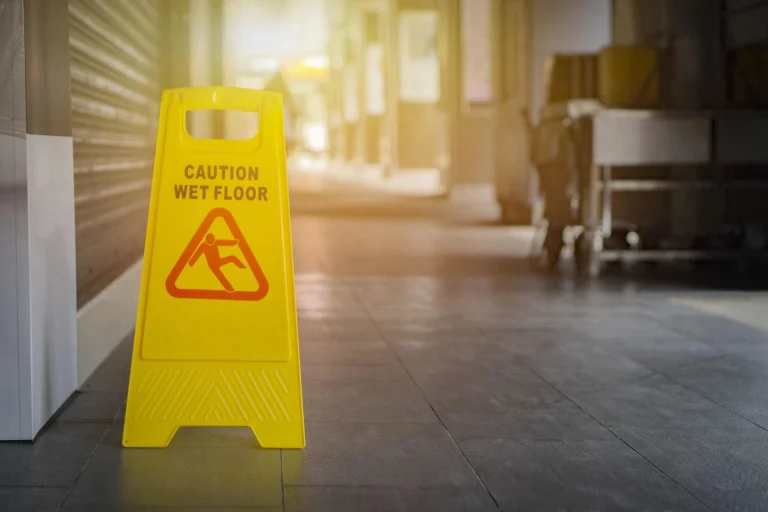
You might be replaying the moment over and over in your head. You were walking through a store, a restaurant, maybe even an office lobby in Philadelphia. Your feet went out from under you, pain shot through your back or your hip, and before you even stood up, someone said those words that still ring in your ears.
“Well, there was a wet floor sign.”
Now you might be wondering if that one plastic sign means your slip and fall claim is dead before it even starts. Maybe the manager shrugged. Maybe an insurance adjuster hinted that you were at fault. You might feel embarrassed, blamed, and afraid of medical bills or missed work piling up.
Here is the short version. In Pennsylvania, the presence of a wet floor sign does not automatically destroy your case. It is one piece of evidence, not the whole story. The law asks much bigger questions. Was the warning reasonable? Was the hazard handled properly? Did the property owner act with care? That is where your rights live.
So where does that leave you if you are hurting and unsure what to do next.
How Pennsylvania slip and fall law really looks at “wet floor” warnings
Slip and fall cases fall under something called premises liability. That simply means a property owner or manager has a legal duty to keep their space reasonably safe for people who are allowed to be there. In Philadelphia that could be a grocery store, a big box retailer, a doctor’s office, or even a parking lot.
Because of that duty, a business must do more than toss out a sign and walk away. The law looks at what a reasonably careful property owner would have done under the same circumstances. A sign is only part of the answer.
Here are some questions that often matter more than “Was there a sign?”.
- How long had the spill or hazard been there?
- Did employees know about it, or should they have known?
- Was the area actually being cleaned or monitored?
- Could the sign be seen from the direction you were walking?
- Was the lighting poor or the floor unusually slippery?
Imagine this. A grocery store mops up a spill, places a bright yellow sign directly next to the wet area, and an employee stands nearby while the floor dries. That is very different from a store where a drink leaks from a cooler for hours, a worker slaps a sign somewhere in the general area, and no one fixes the leak or dries the floor.
In one situation, the warning is part of a careful response. In the other, the sign can feel more like a shield against blame than real safety. Pennsylvania law pays attention to that difference.
Why a wet floor sign alone does not end a Pennsylvania slip and fall claim
You might be thinking, “But the insurance company said I should have watched where I was going.” That kind of comment taps into a real legal concept in Pennsylvania called comparative negligence. It means your actions are also considered. Maybe you were looking at your phone, or carrying a heavy bag, or hurrying to the restroom.
Comparative negligence does not mean you automatically lose. It means a judge, jury, or insurance adjuster may assign percentages of fault. For example, they might decide a store was 70 percent responsible, and you were 30 percent responsible, because you were distracted. In that situation, your compensation could be reduced yet not erased.
This is where the presence of a warning sign gets weighed. The question is not simply “Was there a sign?” The real questions are “Was the warning reasonable under the circumstances?” and “Was the danger still unreasonably risky even with that sign there?”
Consider a few common problem scenarios in Philadelphia slip and fall cases.
- The sign was placed far away from the actual wet spot, so you never saw it.
- The sign was hidden behind a display, trash can, or open door.
- The floor was glossy, lighting was dim, and the water was clear, so the hazard was hard to see.
- The area was heavily trafficked, but the store chose to mop during peak hours instead of blocking it off.
- The hazard was not just water, but soap, grease, or another substance that made the floor extremely slick.
In each of these, a property owner might say, “We had a sign.” The law may answer, “That was not enough.”
There are also situations where special rules can apply. For example, outdoor recreational areas can be affected by the Recreation Use of Land and Water Act in Pennsylvania, which limits certain liability for landowners in specific circumstances. That is one more reason your exact facts matter.
What research and safety guidance tell us about slips, trips, and falls
Falls are not rare accidents. They are a known safety problem. National safety groups and workplace safety experts have studied them for years. Guidance from sources like the Tulane University occupational health program explains common causes and prevention strategies for slips, trips, and falls. These include proper cleaning methods, timely cleanup of spills, using the right floor materials, and placing warnings where they actually help people.
All of this supports a simple truth. A plastic cone or sign is not a magic shield. Real safety requires real effort. When a property owner cuts corners, people get hurt.
Comparing “There was a sign” to what a careful property owner should do
So how do you know if what happened to you was an unavoidable accident or a preventable injury that falls under premises liability in Philadelphia? The table below offers a basic comparison.
| Issue | Minimal effort (often what defendants claim) | Reasonable safety effort |
|---|---|---|
| Response to spill | Place one wet floor sign somewhere nearby and walk away | Quickly clean the spill, place clear warnings, and check the area until it is dry |
| Location of sign | Sign is off to the side or blocked from view | Sign is visible from all common walking directions |
| Ongoing hazard | Ignore a leak or recurring spill and rely on signs | Fix the source of the leak and monitor for new hazards |
| Lighting and visibility | Leave poor lighting and glossy flooring unchanged | Improve lighting, consider non slip flooring, and warn about known risks |
| Traffic level | Mop during busy times with only a single sign in place | Block off the area or clean during slower times when fewer people are exposed |
If your experience matches the “minimal effort” side of this table, your claim may be stronger than you have been led to believe, even if a wet floor sign was present.
Practical issues you might be facing after a slip and fall in Philadelphia
By now, you may not just be dealing with pain. You might be juggling several problems at once.
- Medical bills for emergency care, imaging, or physical therapy.
- Time off work, lost wages, or even the risk of losing your job if you cannot return quickly.
- Difficulty taking care of children, older family members, or even basic chores at home.
- Embarrassment or shame, especially if someone suggested you were “clumsy” or “not paying attention.”
- Stress from calls or letters from insurance companies that feel one sided or confusing.
On top of that, if you were hurt in a business open to the public, you might quietly wonder if you were treated differently because of your race, disability, or another protected trait. In some circumstances, unsafe conditions or responses can be part of a broader pattern of unfair treatment. The Pennsylvania Human Relations Commission explains how discrimination in public places works under public accommodation discrimination laws, which sometimes intersect with premises issues.
All of this can feel heavy. You may feel pressure to move fast, to give recorded statements, or to accept a quick settlement. Yet you also deserve time and clear information before you sign away your rights.
Three immediate steps to protect yourself after a slip and fall
1. Get medical care and document your symptoms
Even if you tried to “walk it off” at first, pain from a slip and fall can worsen over hours or days. See a doctor or urgent care provider as soon as you can. Tell them exactly how you fell and every area that hurts, even if it seems minor. Follow their treatment plan, attend follow-up visits, and keep copies of your records and bills.
These records are not just about a legal case. They protect your health and can help connect your injuries clearly to the fall.
2. Preserve evidence from the scene and your recovery
If it is still possible, take photos or videos of the area where you fell. Capture the wet spot, the position of any wet floor sign, lighting, nearby displays, and any cameras you can see. Save the shoes and clothing you were wearing. Do not wash them yet.
Write down your memories while they are fresh. Note the time and date, what you were doing, what employees said, and any witnesses you can identify. If an incident report was filled out, ask for a copy. Keep a journal of your pain, sleep problems, and how the injuries affect your daily life.
3. Talk with a premises liability attorney before dealing with insurers alone
Insurance adjusters work for the property owner, not for you. Their questions may sound friendly, yet their job is to limit what the company pays. Before you give a recorded statement or sign any forms, consider speaking with an attorney who understands slip and fall law in Pennsylvania and how wet floor signs are used in court.
An experienced lawyer can review your situation, explain your options in plain language, and handle communications with the insurer so you are not pressured or misled. Many firms, including Philly Slip and Fall Guys, offer a free consultation so you can understand your rights without upfront cost.
Moving forward when you are unsure what your case is “worth”
You do not have to know the value of your claim right now. You do not have to have every receipt organized or your pain perfectly described. What matters is that you were hurt on someone else’s property, you suspect it could have been prevented, and you want honest guidance about what comes next.
Philly Slip and Fall Guys handles premises liability matters throughout Philadelphia, including cases where businesses try to hide behind a wet floor sign. If you want to talk through what happened, you can reach the firm at 215-268-6898 for a free consultation. You deserve to be heard, to have your questions answered, and to find out whether the law is on your side, sign or no sign.