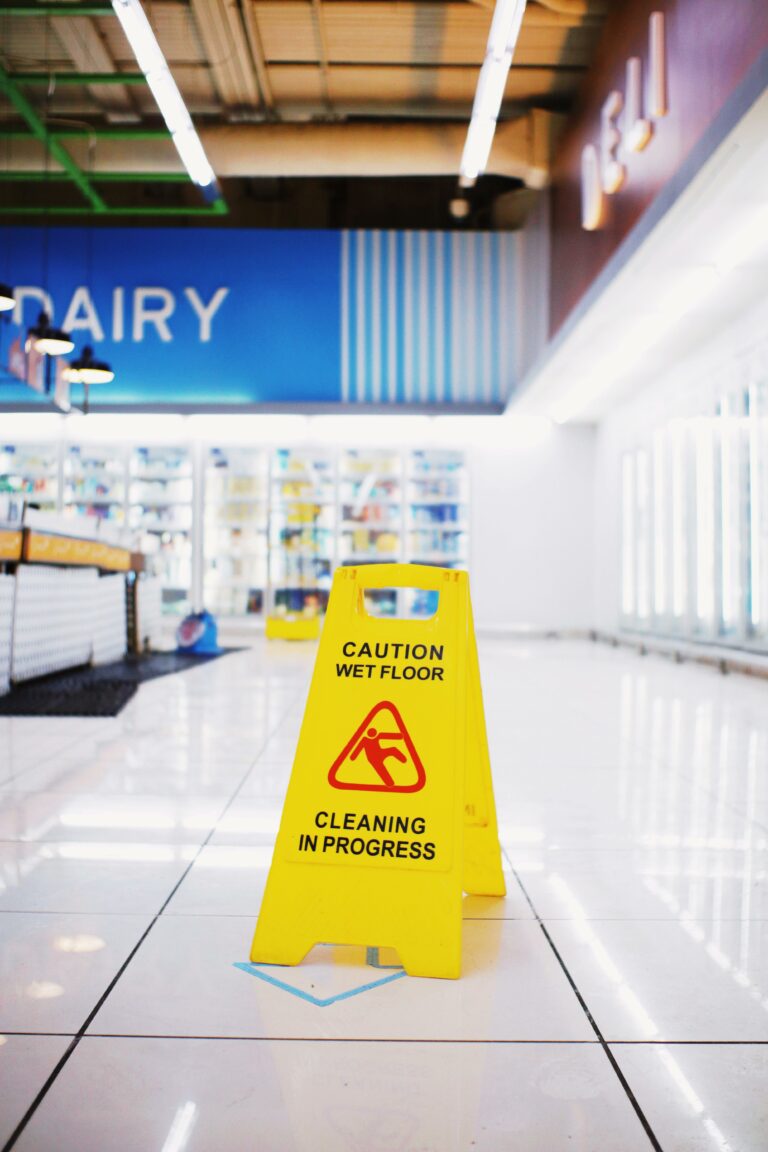
You stopped for gas, a coffee, or a quick snack. Maybe you slipped on a wet floor near the register. Maybe you tripped on a cracked piece of pavement by the pumps. Now you are hurt, and you wonder if the store or the station owner can be held responsible.
In many cases, the answer is yes. Gas stations and convenience stores in Philadelphia have a duty to keep their property reasonably safe. When they fail and someone gets hurt, the law may give that person a way to seek payment. This post explains when you can sue, what you need to prove, what evidence helps, and what steps to take after a fall.
Why Gas Stations and Convenience Stores Have So Many Falls
Today, a gas station is far more than a place to fill your tank. Many act as convenience stores, coffee shops, and even small restaurants. People come and go at all hours, in all kinds of weather, carrying drinks and snacks and often rushing. More traffic means more spills, more tracked-in water, and more chances for something to go wrong.
Falls at these locations can cause serious harm, including broken bones, head injuries, and back injuries. Medical bills can add up fast, and the business or its insurer will not always offer to help without a claim.
When a Gas Station Owner Can Be Held Liable
Slip and fall cases in Pennsylvania are based on negligence. In plain words, this means the owner failed to take reasonable care to keep the property safe. To succeed, you generally have to show four things:
- The owner owed you a duty of care
- The owner broke that duty
- The break in duty caused your fall
- You suffered real harm, such as an injury and medical costs
The owner’s duty is often called premises liability. It means property owners and operators must look for hazards, fix them in a timely way, and warn customers when a hazard cannot be fixed right away.
The Role of Notice
The most important question in many cases is notice. A business is usually not responsible just because a hazard existed. You generally need to show that the owner knew about it, or should have known about it. That can be shown in three ways:
- The owner or an employee knew about the hazard and did not fix it
- The hazard had been there long enough that a careful owner should have found it
- The owner or an employee created the hazard
If a worker mopped a floor and left no warning sign, that may point to notice. If a spill sat there for a long time while staff walked past, that may also show it. If a hazard appeared a few seconds before you fell, notice is harder to prove.
Common Hazards Inside a Gas Station or Convenience Store
Inside, the store can hide more dangers than people expect. Common examples include:
- Spilled drinks, slushies, and coffee
- Dropped or broken glass bottles
- Wet floors from rain tracked in by customers
- Recently mopped floors without warning signs
- Floor mats that curl, bunch up, or slide
- Boxes, candy, or stock left in the aisles
- Slippery bathroom floors
- Poor lighting in hallways or stock areas
The key question is whether the condition was foreseeable and whether the store took reasonable steps to deal with it.
Common Hazards Outside, at the Pumps and in the Lot
The outdoor areas of a gas station carry their own risks, especially in Philadelphia weather.
- Fuel spills and oil leaks near pumps
- Ice and snow in parking areas, including near a car wash
- Piled snow that melts and refreezes
- Cracked or uneven pavement and sidewalks
- Poorly marked curbs or parking stops
- Wet surfaces from rain and poor drainage
- Dim lighting at night
Snow and ice raise special questions. Owners are generally given a reasonable amount of time to clear a lot after a storm. A fall in the middle of a storm may be treated differently from a fall days after it ends.
Who You Might Sue
It is not always clear who is responsible. A gas station can involve more than one party:
- The business that runs the store or station
- The person or company that owns the land and building
- A franchise owner or a larger chain
- A cleaning or maintenance company
- A snow removal contractor
The operator and the property owner may be different entities. Picking the correct one matters, because suing the wrong party can waste time. An attorney can look at leases, contracts, and public records to find out who controlled the area where you fell.
Evidence That Helps Prove Negligence
Without proof, even a real injury can be hard to win. Strong evidence often includes:
- Surveillance video, which can show how long a hazard was there, whether workers walked past it, and whether anyone tried to clean it up
- Maintenance logs and cleaning schedules, since gaps or odd entries can weaken a station’s defense
- Incident reports filled out by the store
- Photos of the hazard, the area, your shoes, and your injuries
- Witness statements about what they saw and how long the problem existed
- Medical records that link your injuries to the fall
- The shoes and clothing you wore at the time
Video is often kept for only a short time before it is recorded over. Ask the store early to save it, or have an attorney send a request.
What to Do After a Slip and Fall in Philadelphia
The steps you take right after a fall can protect your claim. If you are able to, follow these steps:
- Report the fall to the manager and ask that an incident report be filled out.
- Take photos or video of the exact spot, including any spill, crack, or missing sign.
- Get names and phone numbers of witnesses.
- Keep the shoes and clothing you wore.
- Get medical care right away, even if you think the injury is small.
- Write down what happened while it is fresh.
- Do not give a recorded statement to an insurer before you understand your rights.
- Talk to a premises liability attorney as soon as you can.
Waiting can cause problems. A spill that is cleaned up before it is recorded becomes harder to prove, and delays in reporting can make an insurer doubt your story.
What If You Were Partly at Fault
Insurers often say the injured person was not paying attention. Pennsylvania uses a comparative negligence rule found in 42 Pa. C.S. Section 7102. Under this rule, your payout is reduced by your percentage of fault. You can still recover as long as your fault is not more than 50 percent. If you are found more than 50 percent at fault, you are barred from recovering.
Here is a simple example. Say your damages come to $100,000, and you are found 20 percent at fault. You could recover about $80,000. A business can still be responsible for its share, even if you did something wrong.
How Long You Have to File a Lawsuit
In Pennsylvania, you generally have two years from the date of your fall to file a personal injury lawsuit. This time limit is found in 42 Pa. C.S. Section 5524. If you miss it, a court will usually refuse to hear your case, no matter how strong it is. Claims against a government body can have shorter notice rules. Do not wait until the last minute.
What Compensation You May Recover
If you win or settle your claim, you may be able to recover money for:
- Medical bills, including emergency care, follow-up visits, and future treatment
- Lost wages from time away from work
- Reduced earning power if you cannot do the same work
- Pain and suffering
- Out-of-pocket costs, such as rides to appointments or medical equipment
Gaps in treatment can lower the value of a claim in the eyes of an insurer. Following your doctor’s plan helps protect both your health and your case.
How Gas Station Claims Are Evaluated
Insurance companies and courts look at three big areas: liability, causation, and damages. They ask questions like these:
- Was the hazard easy to see?
- Did the injured person ignore an obvious danger?
- Did the injured person wait to get treatment?
- Is the story of what happened consistent?
- Did the store follow its own cleaning and safety rules?
Small details can matter, such as whether warning cones were out, how long the hazard had been there, or whether an employee walked right by it. Most claims are settled through the insurance process without going to trial.
When to Call a Lawyer
It helps to talk to an attorney early. A lawyer can move fast to keep video and records from being lost, find the right parties to blame, and deal with adjusters so you do not make a costly mistake. If you already spoke with an insurer, that is still no reason to wait.
Frequently Asked Questions
Can I sue a Philadelphia gas station if I slipped and fell?
Yes, if you can show the owner was negligent. That means proving the owner knew or should have known about the hazard and failed to fix it or warn people, and that the hazard caused your injury.
What should I do first after a fall at a gas station or convenience store?
Report the fall to the manager and ask for an incident report. Take photos, collect witness contact information, keep your shoes and clothing, and get medical care. Then speak with an attorney.
How long do I have to file a slip and fall lawsuit in Philadelphia?
You generally have two years from the date of the fall. Shorter notice rules may apply if a government body is involved, so do not wait.
Can I still recover money if I was partly at fault?
Yes. Under Pennsylvania’s comparative negligence rule, your payout is lowered by your share of fault, and you can recover as long as you are not more than 50 percent at fault.
What if the store says it has no video?
Missing video does not always end your case. Incident reports, maintenance logs, witness statements, and photos can help. An attorney can also look into why the video is gone.
Talk to a Philadelphia Slip and Fall Attorney
A fall at a gas station or convenience store can leave you with pain, bills, and questions about what comes next. You do not have to sort it out alone. Philly Slip and Fall Guys can look at what happened, find the party responsible, and work to protect the evidence in your case. Call 215-268-6898 for a free consultation to talk about your fall and your options.