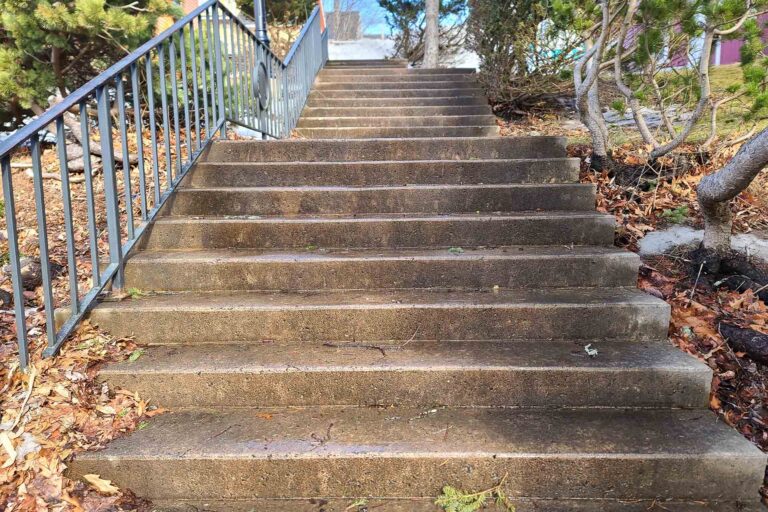
A handrail is supposed to catch you when you need it. When it does not, because it is loose, broken, or missing entirely, a routine trip up or down a staircase can turn into a serious injury in seconds. If that happened to you in Philadelphia, you are probably wondering whether the property owner is actually responsible and whether you have a real case.
The short answer is yes, you can sue, but only if you can show the property owner was negligent. This post walks through what makes a handrail dangerous, what Pennsylvania’s building code actually requires, how to prove a claim, and what kind of compensation might be available.
When a Handrail Becomes a Hazard
Handrails exist to help people keep their balance on stairways, ramps, walkways, and inclines. When a handrail is working the way it should, most people barely think about it. The problem starts when a handrail stops doing its job, or was never installed where it should have been in the first place.
Once a handrail becomes unreliable, whether an owner removed it, never installed it, or simply let it fall apart, it stops being a safety feature and turns into a real hazard. Pennsylvania law allows injured people to hold property owners responsible when this kind of neglect causes a fall.
Common Conditions That Make a Handrail Dangerous
A few specific problems come up again and again in handrail injury cases:
- A loose handrail that cannot support someone’s weight or grip
- A rough or splintered surface that can cut someone or cause them to pull away suddenly
- General disrepair, like rotted wood, rusted metal, or broken sections
- A missing handrail where one is legally required
- A handrail installed at the wrong height or angle
Any one of these conditions can turn a normal trip up the stairs into a fall.
Pennsylvania Building Code Requirements for Handrails
Pennsylvania’s building code sets specific, measurable standards for handrails, which makes it easier to show when a property actually violated the law rather than just relying on general safety arguments.
Under the code, a handrail is required on any stairway with more than two steps, and on any porch or deck with a drop-off of 18 inches or more. When a handrail should exist under these rules and does not, that missing handrail is a hazard by definition, not just a matter of opinion.
The code also sets rules for how a handrail should be installed. It needs to sit between 30 and 37 inches above the stairs, and it needs to follow the same incline or decline as the staircase itself. A handrail installed too high, too low, or at the wrong angle does not meet the standard, even if a handrail is technically present.
Where Handrail Hazards Commonly Show Up in Philadelphia
Handrail problems are not limited to any one type of building. In Philadelphia, they show up in places like:
- Apartment building stairways
- Retail stores and small businesses
- Fire escapes
- Public parks and outdoor stairways
- Large venues and stadiums
- Hospitals and medical buildings
- Schools and universities
- Government buildings and public facilities
- Museums and other tourist destinations
If a handrail failed you at any of these kinds of locations, the property owner or manager may bear responsibility, depending on how the hazard came about and how long it existed.
Proving Negligence After a Handrail Fall
Getting hurt because of a handrail is one thing. Proving the property owner is legally responsible is a separate step, and it usually comes down to notice.
Actual Notice
Actual notice means the property owner directly knew about the problem before your fall. This could come from a tenant complaint, a maintenance report, or a previous incident involving the same handrail.
Constructive Notice
Constructive notice applies when the owner did not technically know about the hazard, but should have known. If a handrail had been rotting or loose for weeks or months, a reasonable property owner doing routine inspections should have caught the problem long before someone got hurt.
Beyond notice, a claim can also succeed by showing the handrail was installed or repaired incorrectly in the first place. In that case, the property owner or the contractor who did the work may be found negligent, regardless of how recently the work was completed.
Who Can Sue for a Handrail Injury?
Not everyone injured on someone else’s property has the same legal standing, and Pennsylvania law treats visitors differently depending on why they were there.
Invitees, meaning customers, tenants, and people visiting for a business purpose, receive the strongest legal protection. Property owners owe invitees the highest duty of care, which includes properly maintaining handrails and fixing known hazards.
Licensees, such as social guests, are owed a slightly different duty. Property owners have to warn licensees about dangers that are not obvious, including a handrail problem the guest would not have reason to notice on their own.
Trespassers generally have limited legal protection, but a property owner still cannot knowingly create a dangerous condition to harm someone. If children are known to frequently access an area with an appealing but dangerous feature, a property owner may still owe a limited duty under what is sometimes called the attractive nuisance rule.
Common Injuries From Handrail Falls
Falls caused by a faulty or missing handrail can lead to a wide range of injuries, including:
- Traumatic brain injury
- Concussions
- Broken hips
- Broken wrists and other fractures
- Severe sprains
- Deep cuts from splintered or rusted surfaces
- Long-term mobility problems
Some of these injuries heal within weeks. Others result in permanent limitations that affect someone’s ability to work or live independently.
What Compensation Might Be Available
If your fall was caused by someone else’s negligence, you may be entitled to recover several types of damages, including:
- Medical expenses, from emergency treatment through ongoing care and future treatment needs
- Lost income, including wages missed during recovery and any reduction in future earning capacity
- Pain and suffering, covering the physical and emotional toll of the injury
- Property damage, if personal items were damaged during the fall
Defenses a Property Owner Might Raise
Property owners and their insurance companies rarely accept blame without a fight. A few common defenses show up in handrail injury cases:
- The owner had a routine inspection process in place and argues the defect was too recent to have been caught
- The owner knew about the problem and claims they were already in the process of fixing it when the injury happened
- The owner presents evidence, sometimes from a contractor or building inspector, that the handrail was actually installed or repaired correctly
Comparative Negligence in Pennsylvania
Pennsylvania uses what is called a modified comparative negligence system. This means your compensation can be reduced by whatever percentage you are found to be at fault for your own fall. If you are found more than 50 percent at fault, you cannot recover any compensation at all.
This is one more reason property owners and insurers often try to argue that a hazard was obvious, or that you should have been paying closer attention, rather than admitting the handrail itself was the real problem.
How Long Do You Have to File?
Pennsylvania gives injured people two years from the date of the fall to file a personal injury lawsuit. That deadline drops significantly for claims against a government-owned property, sometimes to as little as six months, along with strict notice requirements.
Missing these deadlines usually means losing the right to recover compensation entirely, so it pays to act quickly rather than waiting to see how your recovery goes.
Frequently Asked Questions
Can I sue if the handrail was missing entirely rather than just broken?
Yes. Pennsylvania’s building code requires a handrail on stairways with more than two steps and on porches or decks with a significant drop-off. A missing handrail where code requires one is a hazard on its own, and it can support a claim just as a broken handrail can.
What if the property owner says they didn’t know the handrail was a problem?
Not knowing about a hazard is not always a full defense. If the problem existed long enough that a reasonable inspection should have caught it, that is called constructive notice, and it can still support your claim even without proof the owner directly knew about the defect.
How much is my handrail injury case actually worth?
It depends on the severity of your injury, your medical costs, lost income, and how the fault gets divided under Pennsylvania’s comparative negligence rules. An attorney can review the specific facts of your case and give you a realistic sense of what to expect.
Do I still have a case if I was partly to blame for the fall?
Possibly. Pennsylvania reduces your compensation based on your percentage of fault, and you can still recover something as long as you are found 50 percent or less at fault. Being partly responsible does not automatically end your case.
Talk to a Philadelphia Slip and Fall Attorney About Your Handrail Injury
A fall caused by a loose or missing handrail is rarely just bad luck. It is often the result of a property owner ignoring a hazard they knew about or should have caught with basic upkeep. Philly Slip and Fall Guys can review what happened, look at whether the handrail met Pennsylvania’s building code, and help you understand what your case might be worth. Call 215-268-6898 for a free consultation to talk through your situation.