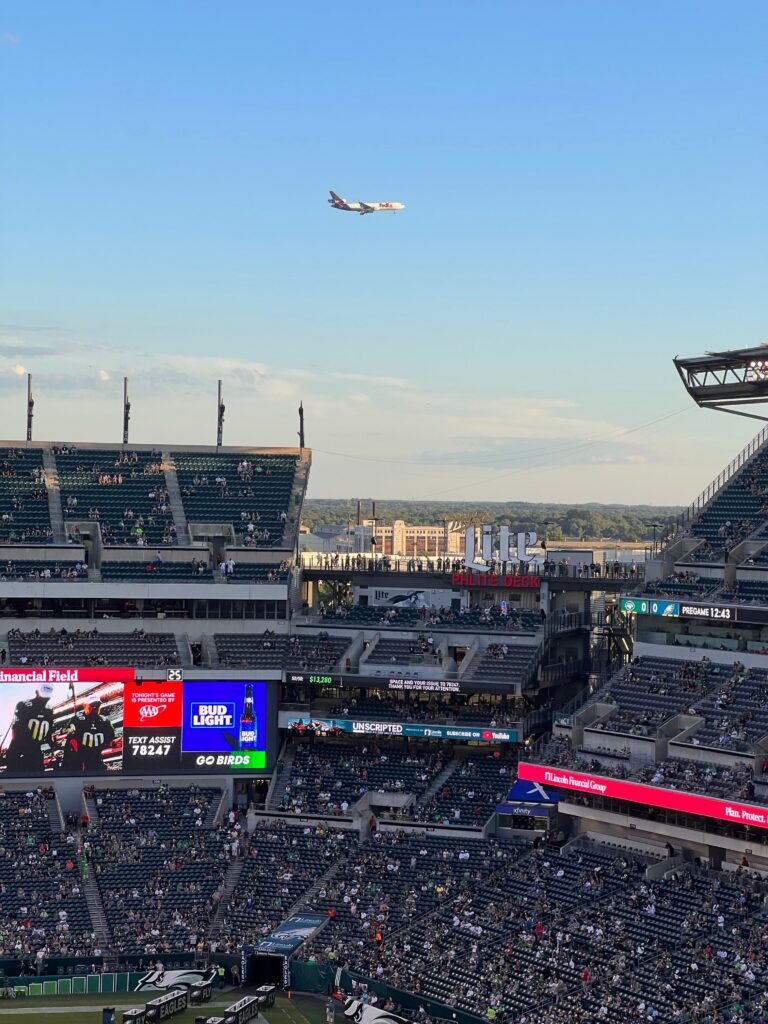
It might have started as one of your favorite days. You were at an Eagles, Phillies, Sixers, or Flyers game, surrounded by noise, lights, and your people. Then your foot hit a wet spot or a loose step, you went down hard, and everything changed in a second. Now you are hurting, maybe embarrassed, maybe angry, and on top of that you feel torn, because you love your team and the last thing you ever wanted was to be “that person” who sues.
You might be wondering how to get medical bills covered, how to deal with missed work, and how to protect your rights without feeling like you are attacking the team you have cheered for your whole life. That tension is very real. The short answer is that a premises liability claim usually targets insurance and stadium management, not the players or the logo on your jersey, and there are calm, respectful ways to handle this so you can heal and move forward.
This guide walks you through what happened, why it matters, what your options are, and how to take smart next steps after a slip and fall accident at a Philadelphia sports venue, all without turning it into a personal fight with your team.
Why Does a Simple Fall at a Philly Game Suddenly Feel So Complicated?
Physically, you might be dealing with more than “just a bruise.” Slip and fall injuries can include sprained ankles, torn ligaments, broken wrists from trying to catch yourself, or even head and spine injuries. Even what seems like a minor fall can turn into weeks of pain and long medical appointments. You may not feel everything right away, especially in the adrenaline of a big game.
Emotionally, there is another layer. You were just trying to enjoy a night out. Now you are replaying what happened. Was there a puddle of beer that no one cleaned up? Was a handrail loose? Was the lighting bad? Then the guilt creeps in. “I don’t want to cost the team money.” “What if people think I am just after a payout?” That mix of embarrassment and loyalty can make it harder to ask for basic help.
Financially, things add up fast. ER visits. X-rays. Follow-up visits. Physical therapy. Time off work. Transportation to appointments. A slip on a stadium concourse can turn into thousands of dollars very quickly, and most people are not ready for that kind of hit to their budget.
So where does that leave you. You did not cause the dangerous condition, yet you are the one carrying the burden. That is exactly why premises liability law exists. Stadiums, just like grocery stores and office buildings, have a legal duty to keep walkways, stairs, and seating areas reasonably safe and to respond to hazards in a timely way. When they do not, the law allows injured people to seek help from the business and its insurance coverage, not from the team you cheer for on the field or the ice.
What Makes a Philly Sports Stadium Responsible for a Slip and Fall Injury?
To understand your options, it helps to know what “premises liability” really means. In simple terms, if a property owner or manager knows or should know about a dangerous condition and does not fix it or warn you, and you get hurt because of it, they can be held responsible for your losses. At a sports arena, that can include things like spills that sit too long, worn or uneven steps, poor lighting, broken seats, or icy walkways at winter games.
For example, imagine you are at a Flyers game. A drink spills in the aisle, and several people walk through it. No one from the stadium staff comes by for 20 or 30 minutes, even though that area is busy. You slip, twist your knee, and end up needing an MRI and physical therapy. In that situation, the question is not “Are you attacking the Flyers?” The question is “Did the arena have fair warning about a slippery hazard and fail to act reasonably?”
Organizations such as OSHA provide general guidance on preventing slip and fall hazards, including good housekeeping, clear walkways, and prompt cleanup of spills. You can see how seriously workplace safety treats these hazards in this OSHA overview of slips, trips, and falls. While a stadium is not exactly a factory, many of the same safety ideas apply.
There are also consumer safety discussions about flooring, traction, and how often people are hurt by falls in public places. If you are curious about the broader context, the Consumer Product Safety Commission shares information on standards related to slip-resistant flooring and fall prevention. This is part of the reason stadium owners carry insurance and have maintenance policies in the first place.
The point is this. Holding a stadium accountable through a premises liability claim is not about turning on your team. It is about asking the business that runs the venue to live up to basic safety standards and to use the insurance they already pay for to cover the harm you suffered.
Should You Just Handle a Stadium Slip and Fall on Your Own or Get Help?
When you are hurt, it can be tempting to “keep it simple” and just deal with the stadium or its insurance company directly. You might think calling an attorney feels too aggressive. The reality is that you are already in an insurance process the moment an incident report is filed. The question is whether you go into that process alone or with guidance.
Here is a comparison that many people find helpful.
| Approach | What It Looks Like | Common Risks | Potential Benefits |
|---|---|---|---|
| Handle everything yourself | You talk with stadium staff and insurance adjusters, fill out forms, gather your own records, and try to negotiate a settlement. | Pressure to give recorded statements, accept quick low offers, or sign releases before you know the full extent of your injuries. Missing deadlines or key evidence. | Feels less formal. You may resolve minor injuries quickly if your medical needs are very limited. |
| Get informal advice only | You search online, talk to friends, maybe ask a lawyer a few quick questions, but you still handle the claim yourself. | Information can be incomplete or not tailored to your situation. Insurance still has the upper hand on rules and valuation. | You feel a little more informed. You may avoid obvious mistakes. |
| Work with a premises liability attorney | An attorney gathers evidence, deals with the insurance company, evaluates your medical records, and negotiates for you. You focus on healing. | People sometimes worry it will “turn it into a fight,” or that it means they are being greedy, even though the goal is fair compensation. | Better chance of accounting for all losses, including future treatment, lost wages, and pain. Less stress handling paperwork and deadlines. |
Where does this fit with your situation at a Philly game? If your fall was minor, you brushed it off, and you have no lingering pain, you may not need help. If you are dealing with ongoing symptoms, medical bills, or time off work, talking to someone who handles these cases every day can give you clarity and protect you from being rushed into something that is not in your best interest.
For broader context on safety alerts and how hazards are identified and addressed, the CPSC also shares various safety alerts and educational resources. These are not about lawsuits. They are about preventing avoidable injuries, which is exactly what you wish had happened before your fall.
What Should You Do Right Now if You Slipped and Fell at a Philly Sports Game?
There are a few steps you can take that protect both your health and your rights, without escalating the situation or turning it into drama.
1. Put your health first and document what happened
Even if you walked out of the stadium, see a doctor as soon as you can. Some injuries, especially to the head, neck, or soft tissues, do not fully show up until hours or days later. Tell the doctor exactly how you fell and where you hurt. Follow their treatment plan and keep copies of your visit summaries, prescriptions, and any work notes.
If possible, write down your own account of what happened while it is fresh. Note the time, location in the stadium, weather conditions, and anything you remember about the floor, lighting, or crowd. If you took photos or video of the area or your injuries, keep them in a safe place. If there were witnesses, save their names and contact information.
2. Make sure the incident is reported, but be careful what you sign or say
Stadium staff should prepare an incident report. If that did not happen at the time, you can contact the venue afterward and ask how to document the incident. Be truthful and factual, but do not guess about things you are not sure of. Avoid phrases like “It was probably my fault” or “I am fine” if you are still in pain.
If the stadium or an insurance company asks you to give a recorded statement or sign forms, it is okay to pause. You can say you are still getting medical treatment and want to review things carefully. Once you sign a broad release or accept a settlement, it can be very hard to go back if your injuries turn out to be more serious than you thought.
3. Talk with a local premises liability lawyer before you decide anything
A calm conversation with someone who handles Philadelphia premises liability claims can give you answers without any commitment. You can ask about your specific situation, how responsibility is evaluated in stadium cases, and what a fair outcome might look like for you. This is not about “going after” your favorite team. It is about making sure you are not left holding the bill for a hazard that should have been handled by the people in charge of the property.
Philly Slip and Fall Guys offers a free consultation, so you can get clear on your options without adding more financial stress. You can call 215-268-6898 to talk through what happened and what you might do next.
Finding a Way Forward After a Stadium Slip and Fall
You did not ask to get hurt at a game you were supposed to enjoy. You did not ask to feel torn between loyalty to your team and the reality of medical bills and ongoing pain. Wanting fair help with your losses does not make you disloyal. It makes you human.
When you pursue a premises liability claim after a stadium slip and fall, you are using a system that exists so that businesses maintain safe spaces and carry insurance for exactly these moments. The players on the field will never read your medical records. The mascot will not show up in court. This is about you, your health, and the property owner’s responsibilities.
If you are ready to talk it through, even if you are not sure you want to move forward, you can reach out to Philly Slip and Fall Guys for a free consultation. Call 215-268-6898. You deserve clear answers, steady guidance, and a path that respects both your love for your team and your need to heal and be made whole.