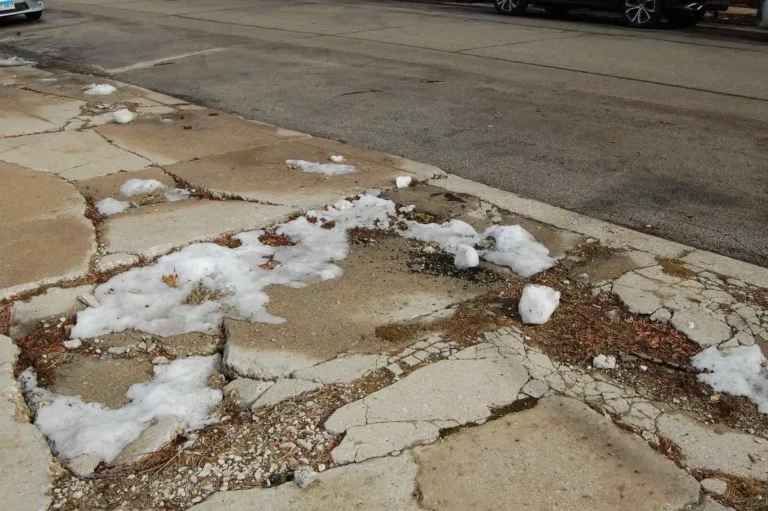
A cracked step. A loose paver. A sunken patch in the path to the front door. People trip on these every day in Philadelphia apartment buildings, and one bad fall can mean a broken wrist, a torn knee, or months away from work. Most people ask the same thing afterward: who has to pay for this?
The answer is not always the person named on the deed. Pennsylvania law looks at who controlled the walkway, who knew it was broken, and who could have fixed it. Sometimes that is the landlord. Sometimes it is a property manager, a repair company, or a government agency. Sometimes it is more than one of them. This guide explains how each piece works in plain language. It gives general information only, and it does not decide any one case. No owner is automatically at fault just because someone got hurt on the property.
The Short Answer on Apartment Building Walkway Liability
The person or company that controlled the walkway and failed to use reasonable care is usually the one who is liable. For a broken walkway at an apartment building, that is often the landlord or the property manager. But the answer changes with the facts.
A strong claim usually answers five questions:
- What exactly caused the fall, and where did it happen?
- Who controlled that exact spot?
- Did that person create the problem, or know about it, or should they have known about it?
- What could a careful owner have done, such as repair it, block it off, or put up a warning?
- Did that failure cause the injuries and losses you are claiming?
If the answer to any one of these is weak, the claim gets harder. That is why walkway cases are won or lost on proof, not just on the fact that a fall happened.
Why Control Matters More Than the Name on the Deed
Many people assume the owner is always the one to blame. Pennsylvania courts look deeper. In 2025, the Pennsylvania Supreme Court decided a case called Simone v. Alam. The court explained that premises liability rests on possession and control, not just on owning the property. A possessor can be someone who occupies land and means to control it.
In that case, one co-owner ran the rental. That person hired the manager, approved repairs, directed outdoor upkeep, signed the lease as landlord, and collected the rent. The other co-owner had no hands-on role. The court treated the person who actually ran things very differently from the one who only held title.
This matters for a walkway fall because the person with real control is the person who could have spotted the danger and fixed it. Ownership still counts as evidence, but it is only the start. Investigators look at who really made the decisions.
Proof of control can include:
- The lease and any added pages
- The deed and ownership records
- Management and maintenance contracts
- Who took in rent and repair requests
- Who picked, directed, and paid the repair crews
- Who did inspections or approved fixes
- Emails, texts, work orders, invoices, and witness statements
Pennsylvania Law for Shared Areas in Apartment Buildings
Pennsylvania has a law for shared spaces in buildings with several homes. It is Article V-A of the Landlord and Tenant Act of 1951. It applies to buildings meant for three or more households. Under Section 502-A, a landlord or other possessor who keeps control of stairways, passages, roadways, and other shared areas must use reasonable care in keeping them safe.
The law does not stop at the tenant. It also covers the tenant’s family, workers, business visitors, social guests, and similar people who come in under the tenant’s right to be there. So if you were a delivery driver, a home health aide, a friend dropping by, or a relative, you may still have a claim over a broken shared walkway.
There are limits. Section 502-A does not cover every single-family home or duplex. Even then, other Pennsylvania rules about retained control may still apply, so a smaller building does not always close the door on a claim.
Who May Be Responsible for a Broken Walkway
More than one party can share blame for a broken walkway. Here are the most common ones, and when each may come into the picture.
- Landlord or owner. This party may be responsible if they retained control of the walkway, knew about the damage, ignored a repair duty, or made a bad repair.
- Property manager. A manager may be liable when the company took complaints, ran inspections, hired vendors, or directed maintenance, and then failed to act.
- Maintenance or paving contractor. A contractor who did poor repair work, patched a crack badly, or left a hazard behind may share the blame.
- Snow and cleaning companies. These companies can matter when a walkway is left icy, wet, or blocked after they took on the job.
- Tenant. A tenant may be responsible for a hazard they created or controlled in an area they use, such as a private back patio.
- Government agency or housing authority. If the walkway is public property or the building is public housing, special rules about immunity and notice may apply.
One company can wear several hats, and a contract can split up the jobs. Still, what each party actually did can matter more than what the paper says. A manager who takes on repairs beyond the written agreement can end up carrying duties the contract never listed.
How Liability Changes With the Type of Walkway
A walkway is not just a walkway. Where you fell shapes who owes you a duty of care. Philadelphia buildings often have several kinds of paths, and each one may point to a different party.
Paths Between the Street and the Building
This is the path most residents use every day. If the landlord or manager kept control of it, they may be responsible for inspecting it and fixing breaks. Heavy foot traffic makes it easier to argue that a problem should have been found.
Front Steps, Stoops, and Entrance Areas
Cracked concrete, loose bricks, missing handrails, and bad lighting often show up here. The question is who looked after the steps, the rails, and the light fixtures. Entrances are shared by everyone in the building, so they usually fall under the shared-area rules.
Courtyards, Rear Paths, and Parking Areas
These spaces often have mixed control. A manager may handle the pavement while a contractor handles drainage or snow. Records of who did what, and when, are important here.
Public Sidewalks Next to the Building
Sidewalks can be tricky. In Philadelphia, owners of land next to a public sidewalk often have duties to keep it in repair under city rules. But a government agency may be involved too, which can bring in a short written-notice rule. Do not assume a sidewalk fall works like a fall on a private path.
| Walkway location | Main question | Helpful proof |
|---|---|---|
| Path from street to door | Who inspected and repaired it? | Work orders, photos, inspection logs |
| Front steps or stoop | Who maintained the surface, rails, and lighting? | Repair requests, permits, violation history |
| Courtyard or rear path | Who controlled upkeep and drainage? | Lease, service contracts, prior complaints |
| Parking area or shared driveway | Who handled pavement and lighting? | Contracts, photos, complaint history |
| Public sidewalk | Who owns it, and is a government claim involved? | Deed, city records, repair history |
When a Landlord Who Does Not Live There Can Still Be Liable
Some landlords argue they handed over the property and no longer control it. This is called being out of possession. Pennsylvania generally does not hold that kind of landlord responsible for every problem in an area given over to the tenant. But there are several exceptions, so that defense does not always work.
A landlord may still be on the hook when:
- The landlord kept control over the broken area, especially a shared path tenants need to reach their homes
- A dangerous condition was there when the tenant moved in, the landlord knew about it, and the landlord did not warn anyone
- The property was rented in a way that invited the public in, and the law required a reasonable check or fix beforehand
- The landlord made a repair and did it badly
- The landlord had a duty or agreement to repair, was told about the problem, had a fair chance to act, and did nothing
- The building was so poorly built that it falls into a narrow exception for nuisance
These are starting points, not guaranteed wins. A vague complaint may not point to the exact defect that caused the fall. A request sent the night before an accident may not give the landlord a fair chance to respond. And a promise to fix something does not, by itself, make a landlord strictly liable. Courts look at control, knowledge, timing, reasonable care, cause, and damages.
Proving the Landlord Knew About the Broken Walkway
For most walkway falls, the biggest fight is about notice. Did the owner or manager know about the break, or should they have known? Pennsylvania law lets you prove it in two ways.
Actual Notice
Actual notice means someone with responsibility truly knew about the problem before you fell. This can come from:
- Repair requests by tenants, by phone, text, email, or a resident portal
- Reports from workers, such as a maintenance person or a cleaner
- Earlier falls or near-falls on the same spot
- Notes in inspection reports or contractor reports
- Things the landlord or staff said after your fall
Admissions are worth asking about. After a fall, did a staff member say, “We have been meaning to fix that”? Did the building create an incident report? What people say in the first few hours is often the most honest, and it should be written down while it is fresh.
Constructive Notice
Constructive notice means there was no proof anyone knew, but a careful owner would have found the problem. This takes circumstantial proof. Here are the facts that often matter:
- How visible the damage was
- How big or deep it was
- How long it had been there
- How many people used the walkway, including the staff
- Whether the damage was getting worse over time
- The building’s own inspection habits
Picture a concrete slab that has lifted more than an inch because of a tree root. The raised edge has a worn patch where many feet have scuffed it. It sits right beside the entrance the maintenance crew uses each morning. The building’s own checklist says walkways are checked every month, yet the last three log entries are blank. A jury could decide that a careful owner would have seen that slab long before you tripped on it.
Time matters too. A walkway that has been broken for months is very different from a hazard that appeared a few minutes before a fall. There is no set number of days that creates constructive notice. Each case turns on its own facts.
Philadelphia Housing Codes, Rental Licenses, and Property Records
Philadelphia has rules for rental property, and the records can help your case. Owners of long-term rentals must get a Rental License. The city says owners need to name a local managing agent, show that the home can be legally lived in, provide a Certificate of Rental Suitability on time, and follow housing standards.
The city’s Property Maintenance Code also covers the duties of owners and occupants. It touches on outdoor areas, structures, shared interior spaces, handrails, lighting, ways out of a building, and fire safety. The Department of Licenses and Inspections handles code enforcement, and the city posts Notices of Violation and property history online through a tool called Atlas. These records can show:
- Who owns the building
- Whether the rental license is current
- What permits were pulled
- What complaints were filed
- Which violations were cited and when they were fixed
A violation can be useful evidence, but it does not win a case by itself. A claim still needs a duty, a breach, a link between the problem and your injury, and real losses. In the same way, a clean record or a closed violation does not prove the walkway was safe on the day you fell.
Evidence to Keep After a Fall
Evidence at apartment buildings can vanish fast. A repair crew can fix the walkway the next day. A tenant can move out. Camera footage can be wiped out on a schedule. A new management company can take over and lose old files. That is why quick, lawful action to save proof matters.
Useful items include:
- Wide and close photos of the broken area, taken from several angles
- Video from hallways, entrances, and parking areas
- The incident report and the name of the staff member who took it
- Names and contact details for any witnesses
- The lease, any added pages, and your move-in condition report
- Repair requests, texts, emails, portal messages, and call logs
- Inspection, cleaning, maintenance, and security logs
- Contractor agreements, work tickets, and invoices
- Past complaints or falls in the same spot
- Rental licenses, permits, and records from the city
- Medical records, bills, pay stubs, and a simple diary of how the injury limits your day
A lawyer can also send a preservation letter, which asks the other side in writing to keep the walkway, the footage, and the records as they are.
What to Do After Falling at a Philadelphia Apartment Building
Your health comes first. Here is a simple list to follow if you can.
- Get medical care right away, even if the injury seems small. Some injuries show up later.
- Report the fall in writing to the landlord or manager. Say exactly where it happened and what the condition was. Ask for a copy of the incident report or a report number.
- Describe what you saw. Stick to facts, and do not guess about causes.
- Take photos of the walkway, the lighting, any warning signs, and your injuries, if it is safe to do so.
- Get names and numbers from anyone who saw it.
- Keep your shoes and clothes from that day.
- Do not sign a release or accept a quick payment until you know what it means.
If you spot a danger such as gas, fire, loose wiring, or a failing structure, do not wait around to collect proof. Call 911 or the right city agency. Safety comes before evidence.
Comparative Negligence and Other Common Defenses
The other side will often try to shift blame to you. Common arguments include that the crack was easy to see, that a warning was posted, that you were in a place you should not have been, that the tenant changed the area, or that someone else caused the damage.
Pennsylvania uses a rule called comparative negligence. If a jury finds you were partly at fault, your payment goes down by your share of the blame. If you are found more at fault than the defendants you are suing, you generally cannot recover at all. People often call this the 51 percent rule. An insurance adjuster saying you were mostly at fault does not make it true. Ideas like “open and obvious” danger depend heavily on the facts.
Money You May Be Able to Recover
A strong claim may seek payment for losses caused by the fall. These can include:
- Emergency care, hospital stays, surgery, therapy, and medicine
- Future treatment and rehab that a doctor can support
- Lost pay and a lower ability to earn in the future
- Out-of-pocket costs such as rides to appointments and medical gear
- Pain, stress, disability, and loss of enjoyment of life
- Scarring, disfigurement, or permanent damage
- Wrongful death and survival claims if a fall is fatal
No chart can tell you the value of a walkway claim. The amount depends on how clear the proof is, how serious the injury is, what doctors say caused it, how long recovery takes, the insurance available, any liens from health insurers, and how much blame, if any, falls on you. Landlords often carry liability insurance, so many claims begin with an insurer rather than the owner personally.
Deadlines for Private and Public Walkway Claims
Time limits are strict. Under Pennsylvania law, most injury claims based on negligence must be filed within two years. Some situations can change that, such as the injured person being a minor or not being able to act for a period, so a lawyer should check your dates.
Claims against a government body, such as a housing authority or the city, may have an even shorter first step. Many require written notice within six months. Telling building staff, talking to an insurer, or filing a repair complaint does not always meet that rule or stop the clock. If a public agency may be involved, act fast.
How a Lawyer Looks Into a Walkway Fall
A lawyer can find out who owned, ran, repaired, and insured the building and the walkway. That work often includes sending preservation letters, searching license and violation records, reading the lease and contracts, talking with witnesses, and hiring an expert to inspect the walkway. Counsel can also look into repair and complaint history to see what the owner knew and when.
Here is how a typical claim may move forward:
- A free case review to hear what happened and check the dates
- An investigation to find every party who may share blame
- Treatment and records, so the full injury is documented
- A claim sent to the insurance company with proof of fault and losses
- Settlement talks, which may or may not lead to an agreement
- A lawsuit, if the insurer will not make a fair offer
No lawyer can promise a result. But naming the right parties before a deadline passes is one of the most useful things an attorney can do.
Frequently Asked Questions
Is a Philadelphia landlord automatically liable if I trip on a broken walkway?
No. You generally have to show the landlord owed you a duty, did not use reasonable care, and that this caused your injuries and losses. Control of the walkway and notice of the damage are usually the main points of dispute.
Can I make a claim if I was only a guest or a delivery driver?
Possibly. For buildings with three or more households, the shared-area law reaches beyond the tenant to family, workers, business visitors, and social guests. Your claim still depends on the walkway, who controlled it, what the owner knew, and how you were hurt.
What if I reported the broken walkway and nothing was done?
Written reports can help show the landlord knew. They work best when they point to the same defect that caused your fall. Courts also look at how clear the report was, how much time the landlord had to respond, and what the landlord did next.
Does a housing code violation prove my case?
Not by itself. A violation can show a safety standard, a bad condition, or that the owner was warned. You still must prove the other parts of your claim, including cause, losses, and who is responsible.
How long do I have to file a claim after a fall at an apartment building?
Most Pennsylvania negligence claims for injuries have a two-year limit. Claims involving government property, including public housing, may require written notice in as little as six months. Because exceptions exist, get your dates checked as soon as you can.
Who is liable if the broken walkway is a public sidewalk?
It depends. The owner of the land next to the sidewalk may have duties under city rules, and a government agency may be involved in some cases. Government claims often follow special notice and immunity rules, so sidewalk falls need careful review.
Key Points to Remember
- Liability for a broken apartment building walkway usually follows control, not just ownership.
- Landlords and managers often carry duties for shared paths, steps, and entrances, while tenants may control private areas.
- Actual notice and constructive notice can both prove the owner should have acted.
- Leases, repair requests, inspection logs, city records, photos, video, and witness names all help.
- A code violation is useful evidence, but it does not prove the whole case.
- Most injury claims have a two-year deadline, and claims against government bodies may have a six-month notice rule.
Talk to Someone About Your Fall
If you were hurt on a broken walkway at a Philadelphia apartment building, you do not have to sort out who is at fault by yourself. Evidence gets fixed, thrown out, or erased quickly, and deadlines keep running while you heal. Philly Slip and Fall Guys can review what happened, look into who controlled the walkway, and explain your options. Call Philly Slip and Fall Guys today at 215-268-6898 to ask for your free case review.